Before a section comes down
A removal plan has to account for more than the piece we're cutting. If we're going to lower a section with rigging, the tree has to be able to withstand the forces of that lowering. We settle that before any rigging goes up. It's a separate question from whether we can reach the work, and it applies even when the cut looks simple from the ground.
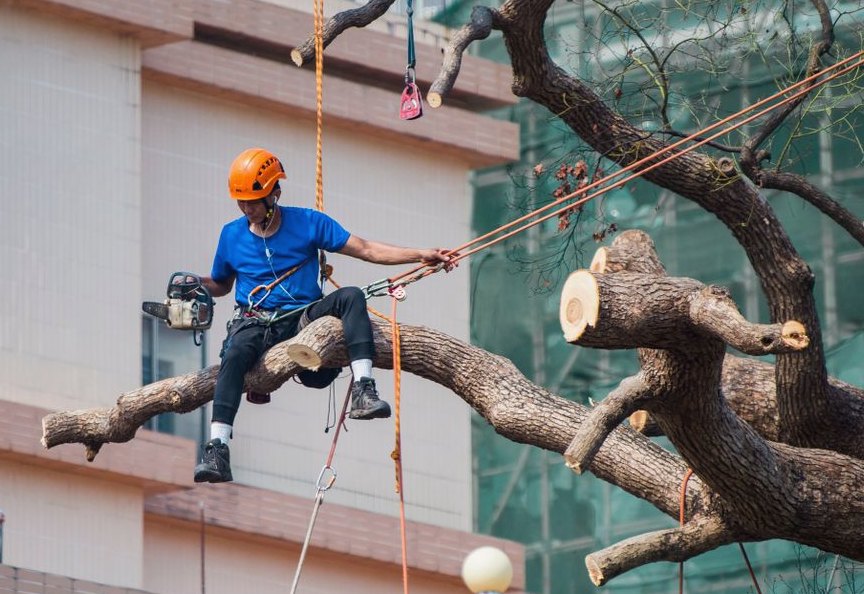
Our arborist climbing line gets a climber into the canopy. It tells us nothing about whether the tree can take the load of a lowered section. The method has to fit what the tree can carry, not the other way around.
If the tree can't take those forces, we pick another removal method. A plan to cut a tree in sections isn't finished until it says how each section comes down and whether the tree can support that.
What the bucket truck is for
An aerial lift, the bucket truck, is our other way to work aloft. We set it up according to its instructions and use fall protection every time. Those requirements come with the machine, and familiarity doesn't replace them.
We don't use the lift to hoist tree parts unless it's designed for that purpose. A bucket on the end of a boom doesn't make it a crane. When you compare bids, ask what the lift will actually be doing on your job: putting a crew in position, or carrying cut sections. Those are different uses, and the second one still depends on the tree-strength question above.
Planting and stressed trees in a semiarid climate
If your concern is a newly planted or stressed tree, removal may not be the answer. Hanford is semiarid, with hot, dry summers and cool, moist winters, so a tree planted here has to get through a long dry season. Newly planted and stressed trees may need attention during dry periods, and that's where we'd start the conversation.
That broad climate pattern doesn't give us one watering schedule for every tree, and it doesn't tell us what the soil is like at your address. It does mean summer care belongs in any plan for establishing a tree.
Hurricane and storm exposure here is low, so storm damage is rarely the reason for a call. Most of the time it's a tree you're deciding about, or one that's struggling.
Questions to ask before you hire
Ask any crew to explain the removal method in plain language. Will cut sections be lowered using the tree? How will they determine whether it can withstand those forces? If a bucket truck is involved, is it there for work aloft, or is it designed for the hoisting being proposed?
We'll answer all of those for your tree, including why we'd switch methods if the tree can't take the load, and what role the lift plays.
When you contact us, say what you're trying to solve. If you want a tree removed, say so. If your worry is a young or struggling tree in a dry spell, start there. We'll keep the visit focused on that.
See the Work
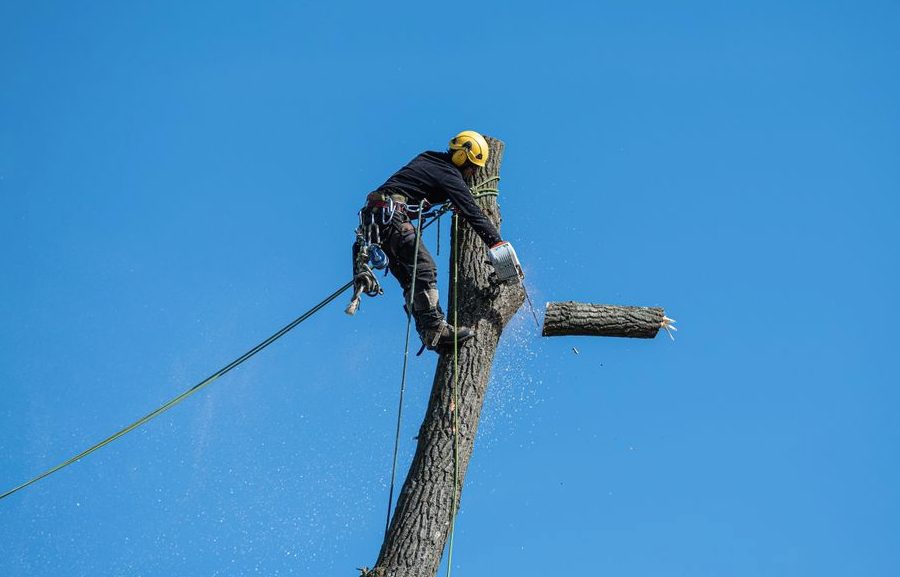
A visual look at what the service involves.

How It Works
-
Tell Us What You Need
Tell us what you need done and when, you'll get a straight answer, not a sales pitch.
-
We Walk the Job
We come out, look at the space, and confirm exactly what the job involves.
-
Know the Price First
You get the scope and the price in writing before any work starts. No surprises.
-
The Job, Done Right
We do the job right the first time, clean up after ourselves, and stand behind the work.
Depending on what we find, that can mean:
- Inspect a chainsaw’s controls, chain tension, bolts, and handles before starting it.
- Treat electrical conductors as energized; work near power lines only with qualified line-clearance personnel and maintain required clearance unless lines are deenergized and visibly grounded.
What It Typically Costs
Ranges to budget around - every situation is priced on its own specifics.
$180–$560
$100–$300
Our Service Area
We work across Hanford, CA. Call (559) 794-9788 to confirm coverage for your address.