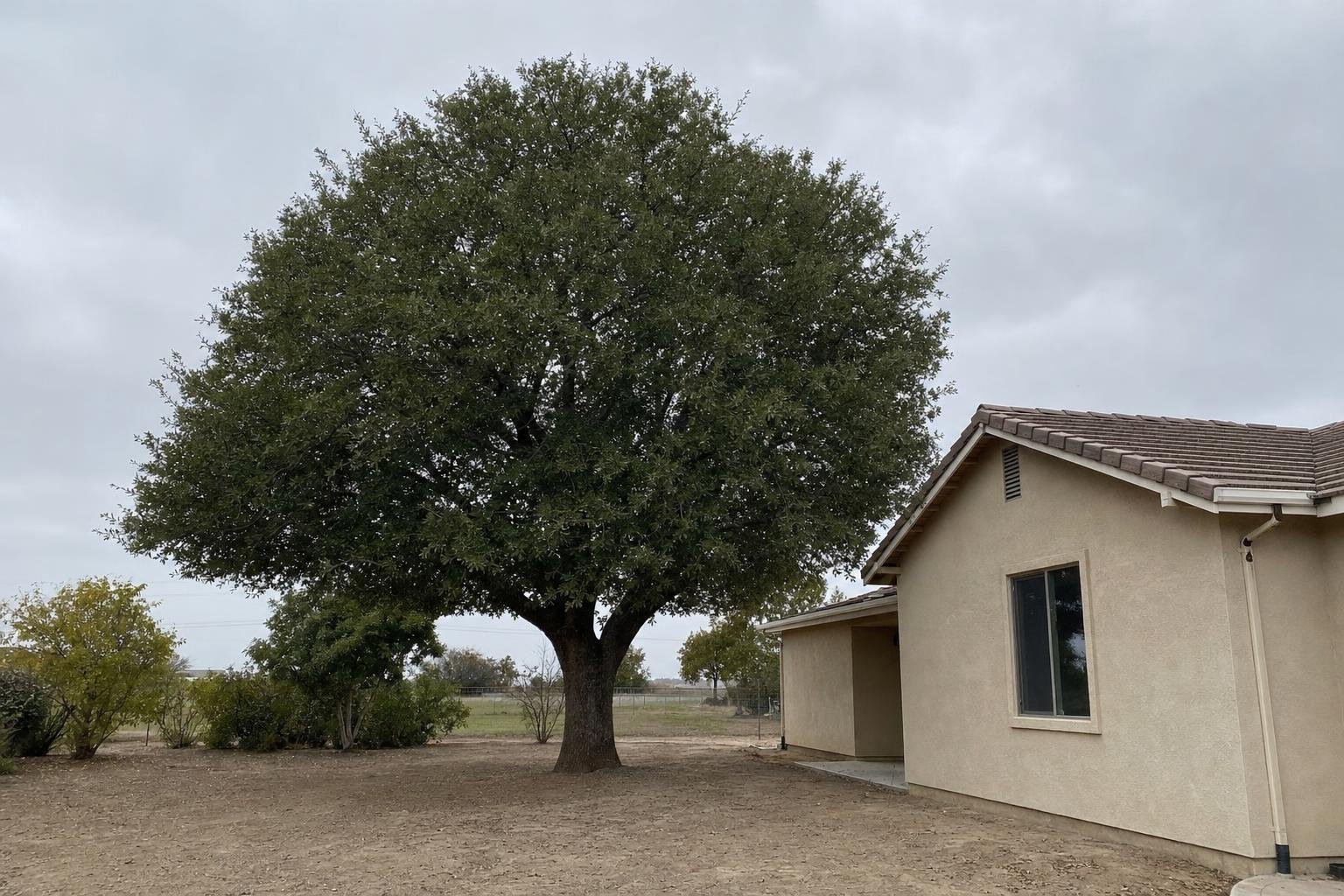
A number pulled from a national website won't tell you much about your lot, so here are the ranges we work from in Hanford and what moves them. A tree 30 feet or shorter comes down for $950 to $1,800 and pulling the stump adds $125 to $175. Ask on the first call and you'll get the usual range for a tree like yours. The final figure is set after we've looked at the tree, and you get it on paper before a chainsaw starts.
What does a standard tree removal cost in Hanford?
Expect $950 to $1,800 for a removal at or under 30 feet. The stump is its own line: $125 to $175 for complete removal. Those ranges fit a small to medium tree with clear access and no power lines nearby.
Height, trunk thickness and the route the pieces take out of the yard set your spot between $950 and $1,800. A short tree on open lawn sits near the bottom. A tree at the top of the height limit, or one we have to carry out through a narrow side yard, sits near the top. Our written quote names the tree, says what we're removing and what we're leaving, and gives one number.
This guide pairs with tree removal. Looking for tree service in Hanford? See every service we offer.
What if my tree is taller than 30 feet?
A tree over 30 feet costs more than the range above, and we won't guess a figure we can't stand behind. A tall tree usually can't be dropped in one piece. Before any cutting, the crew works out if rigging is called for and if it can be set up safely on that tree, then takes it down piece by piece. More time, more labor and more care all go into the price.
Describe the tree when you call and you'll hear whether it probably fits the standard range. A tree that clearly runs past it gets priced after a site visit.
What makes one removal cost more than another?
Position matters most. A tree beside your house, a shed or a fence can't simply be felled. We cut it down in sections and lower each piece, and that takes far longer than a tree with open ground around it. A lean toward a structure or a heavy side makes the rigging more involved.
Power lines change the job. We keep at least 10 feet of clearance from any line. When 10 feet isn't possible, the utility is called to shut off power and ground the lines first, and nobody starts cutting until that's done. That adds coordination time and can add cost.
Ground conditions count too. Street flooding is Hanford's main flood problem, so after a storm we check for standing water and drainage problems before we stage equipment or haul debris across your yard. Soft or flooded ground can change how we get in and out, and the quote with it.
We also mark out a retreat path for anyone on the ground in case the tree goes somewhere we didn't plan. A storm-damaged or split tree is slower for the same reason. Each cut has to be deliberate, so the job takes longer than the same tree standing healthy.
Should I pay to have the stump removed?
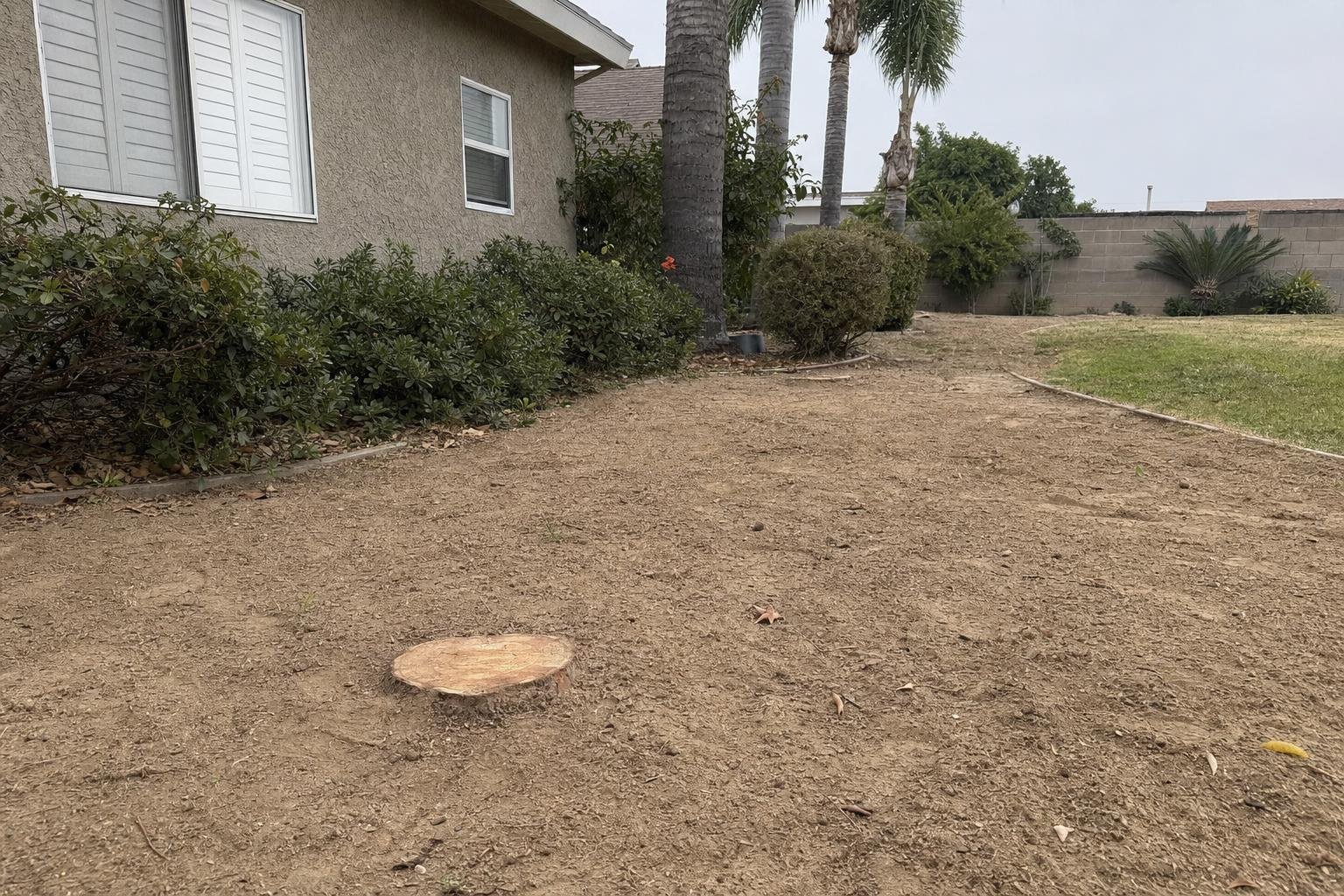
Only if the stump is in your way. A stump left in a lawn gets in the mower's path, takes up the spot where you might plant again, and can become a trip hazard as the ground settles. If any of that bothers you, complete stump removal is $125 to $175 on top of the tree price.
If the stump is tucked in a corner and you don't plan to replant there, leaving it is a fair choice. The written quote states whether the stump is in the price or not.
What happens when I call?
The questions are short: the tree's location, a rough height, and whether a house, fence or power line sits close by. You don't need a measurement, a decision about the stump, or other quotes in hand.
If the tree sounds like a standard job, you'll hear a ballpark range right then. The exact number is confirmed after we see the tree, and it's written down before we start. If a storm has left a tree partly down or blocking access, tell us at the start so we can treat it as urgent. Nothing has to be decided on that first call.
What to Expect to Pay
Read these as planning figures, and we'll go over what pushes a job toward either end.
$100–$1,450
$1,100–$7,500
$250–$1,350
Also Available
Pieces of the Work
In plain terms, steps like these come up:
- Have a qualified arborist assess the tree’s type, condition, structure, and potential hazards before work begins.
- Determine whether rigging is needed and whether the crew can use it safely.
Updated October 2026