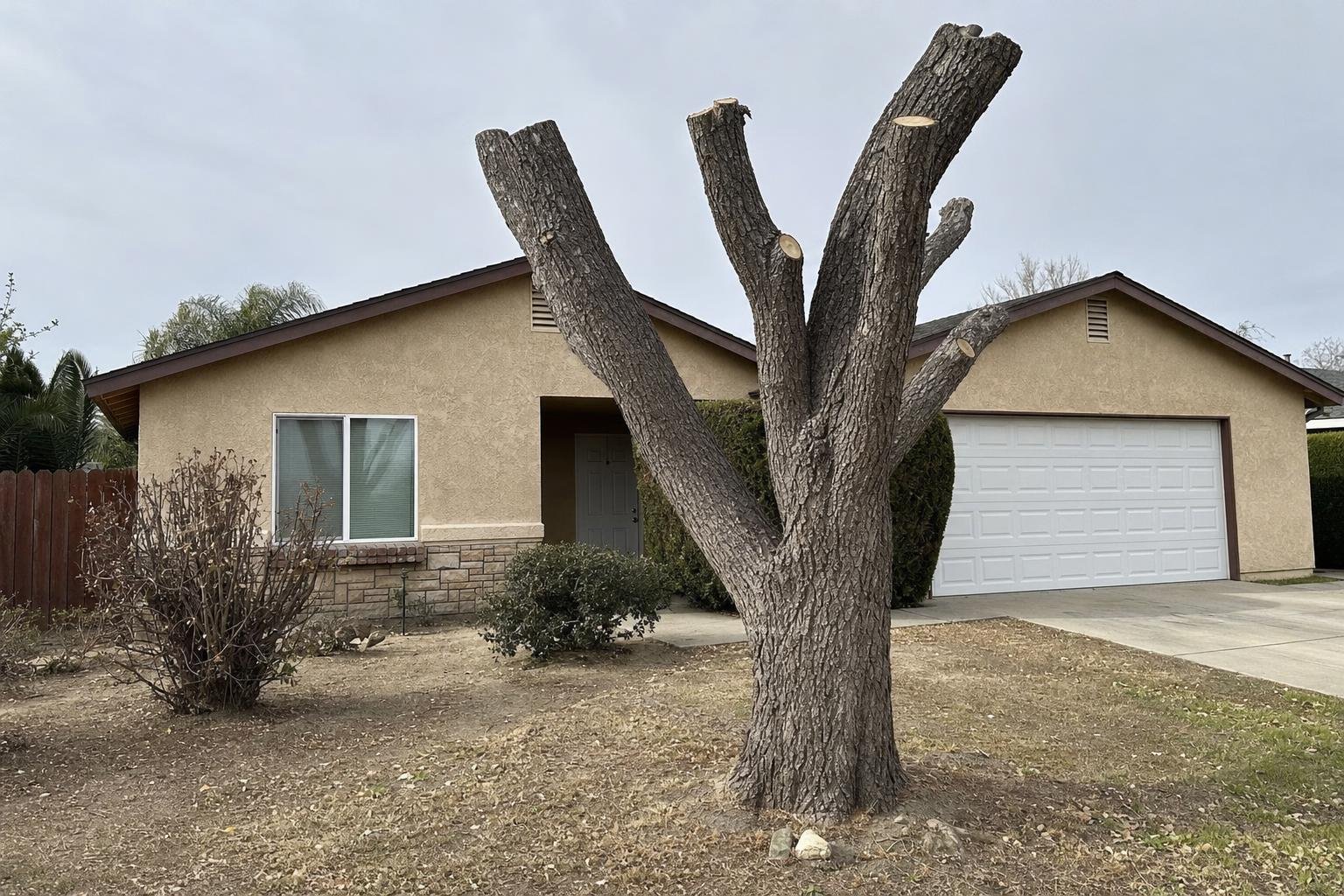
Maybe you're not sure what to do with it. Maybe you've already gotten one quote and the number made you pause. Either way, you want to know whether grinding or digging it out is worth paying for, and whether the city needs to hear about it first. Call us and we'll ask a few questions about where the stump sits. Then we'll put a price on paper for whatever the spot needs, and if that turns out to be nothing, we'll say so.
Do you actually need to deal with the stump?
It depends on what you want that patch of yard to do. If the stump sits in lawn where it will catch a mower blade, or where you want to plant, build or let kids play, it needs to go. A stump tucked along a fence line or in a side yard you never use can sit for years without costing you anything.
Where you plan to dig or pave later, a buried stump is the one that bites. It turns up when the trench or the footing goes in, and removing it then costs more than removing it now.
Ground matters too. Vanguard soils occur in Kings County near Hanford, and they drain poorly and hold a perched water table. If your yard is on them, the ground around old roots stays wet. That makes it a poor spot for a planting pit, so we plan for it before anything goes back in the hole.
These questions come up on tree pruning jobs. Shopping for tree service in Hanford? Our home page has more.
Should the stump be ground or pulled out?
Grind it if you only need the stump gone from sight and from under the mower. Pull it if something heavy or rigid is going over the spot. A grinder chews the stump down below grade and leaves the roots in the ground. You fill the hole with the grindings, which break down over time. It's the lighter job and leaves the smaller hole.
Full removal means digging out the stump and the main root flare. It takes more labor and leaves a bigger hole. Choose it for a concrete pad, a fence post line or a new structure, where roots rotting unevenly underneath would let the surface settle.
We look at the size of the root flare and at what you want on that spot, then tell you which one fits. If the answer is grinding, we won't sell you the bigger job.
Does Hanford require a permit for this?
Possibly, and it depends on where the tree stood. The city's tree-permit application covers planting, pruning or removing street trees in the public right of way, and heritage trees. If the stump is in the strip between your property line and the street, or the tree was a heritage tree, check with the city before anyone cuts or digs.
If the stump is part of a larger development project on your lot, check the city's current requirements as well.
A tree on your own lot that isn't a street tree or a heritage tree is a different case. Street tree, heritage tree or plain backyard tree, we sort out the permit question before a grinder gets scheduled.
What does stump work cost?
Stump work is quoted separately from the tree itself, and we confirm the number after seeing the stump. For reference, removing a tree in the 30 to 60 foot range runs $950 to $1,800 in our pricing. That covers the tree, not the stump.
Three things move the stump price. The first is the stump's diameter, since a wider stump means more material to grind or dig. The second is access: how far the grinder has to travel, and whether a deck or retaining wall limits where it can sit. The third is grinding versus full removal, because pulling the root flare out takes more time than grinding it down. On wet Vanguard soil, the ground around the stump can be soft, which affects how we set equipment and how we deal with the roots.
You'll have the job and the number in hand before any equipment comes off the truck.
What happens when you call?
You'll talk to us directly. We'll ask where the property is, what kind of tree came down, and where the stump sits in relation to buildings, landscaping and fences. We may also ask whether the tree had work done before it came down.
Nothing gets booked or agreed to on that first call. If you only want to know whether the stump has to go, or whether the city will care, we'll answer that on the phone. If you do want it done, we come out, check the stump, the path in and how firm the ground is, and put the number in writing.
Also Available
Inside the Job
In detail, the job can include:
- Establish a retreat path for ground workers to use if the tree falls.
- Maintain at least 10 feet of clearance from power lines, or contact the utility to de-energize and ground lines if that clearance cannot be maintained.
Updated October 2026