We don't schedule by the calendar alone. The tree's condition, the ground under it and anything close to a power line decide it. A ballpark range is available over the phone, and the firm number follows once we've seen the tree.
Is there a bad time of year to trim?
Not really. The condition of the tree matters more than the month. Dead wood in the canopy, or a limb that's cracked and hanging, shouldn't wait for any season. Call as soon as you notice it.
What does hold up a job is wet ground. Street flooding is Hanford's main flood problem, and some ground here drains slowly. After heavy rain we check for standing water and drainage before we stage equipment or haul debris. A wet week can push your job back a few days, but it doesn't change whether the work can be done.
Next read: tree removal. Hiring for tree service in Hanford? Start with our home page.
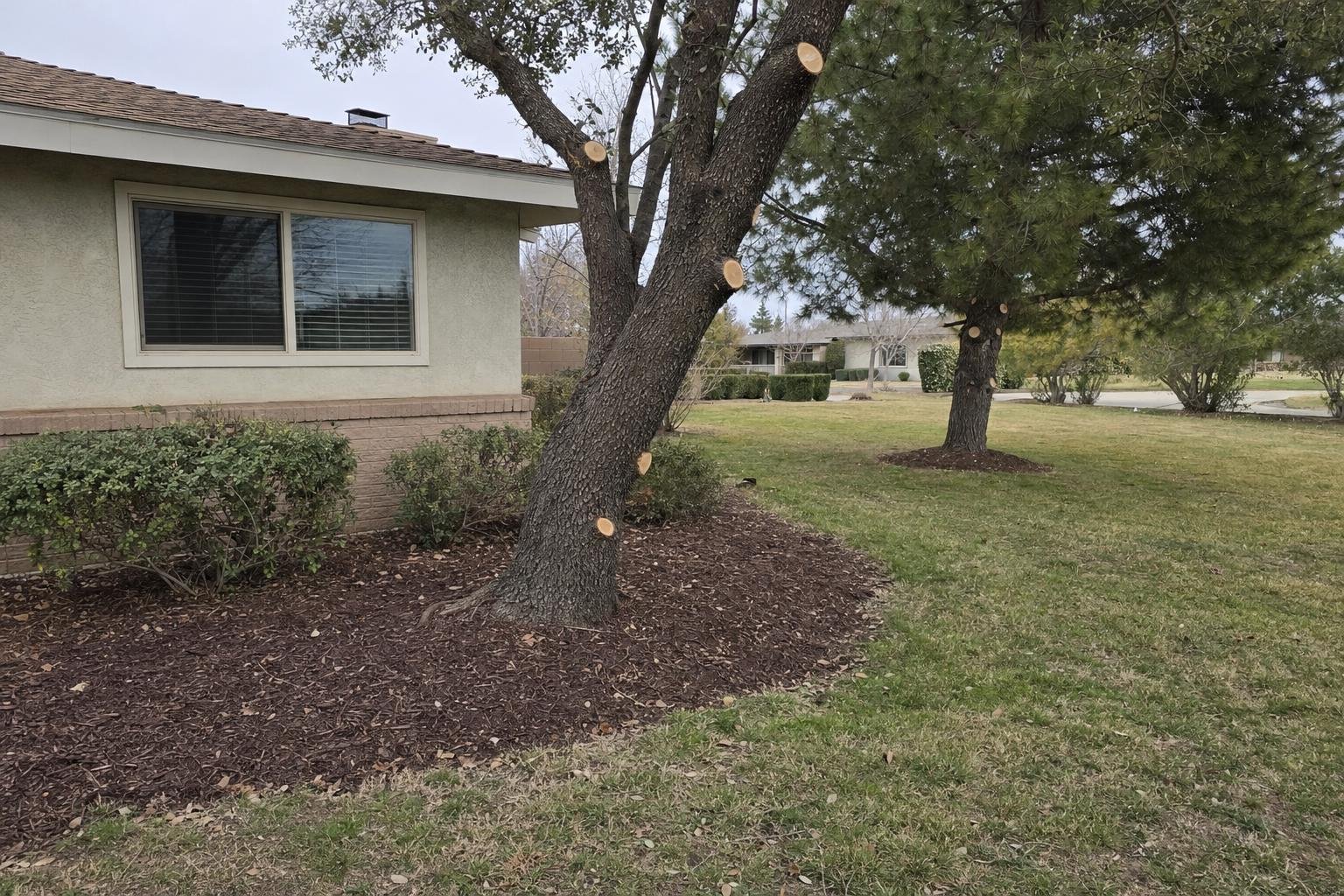
What do we do about a storm-damaged limb?
A limb that broke and is still hanging gets looked at first, because it can drop while anyone is working under it. Hurricane and storm exposure in Hanford is low, so a storm call is usually one failed limb, not a yard full of debris.
We work from the ground with pole tools when the limb allows it. When it doesn't, the crew rigs the limb down, but only if rigging can be done safely on that tree. Before any rope goes on, we check that the tree can bear the load of the rope and of the cut sections coming down.
If the limb is near a power line, stay clear of it. We keep at least 10 feet from the line. If we can't hold that distance, we contact the utility to de-energize and ground the line before we cut.
Sometimes the problem is a weak limb on a tree that's otherwise sound. In that case cabling and bracing can be an alternative to cutting it off. Whether the limb is cracked through or only weak decides which one we use.
What do we ask on the first call, and what do we check on site?
On the call we ask how tall the tree looks from where you're standing, what kind of tree it is if you know, whether it's close to the house, a fence or power lines, and what you want out of the job. You don't need a budget or a plan in mind.
For most trimming we then walk the yard before putting a number on paper. We look at the branch structure, mark any dead wood, and see whether pole tools will reach or the tree needs rigging. If power lines are close, we plan around the 10-foot clearance and note whether the utility needs to be involved. The site visit is part of building the quote and isn't an extra charge.
What moves the price of this work?
Price follows how hard the tree is to get at, whether it needs rigging, how close the wires are, and how sound the wood is. A tree we can reach with pole tools costs less than one that needs rigging. A tree with dead limbs over a roof or a line takes more time than one standing in the open.
Some jobs have set ranges. Cabling and bracing falls between $250 and $1,350. Complete stump removal runs $125 to $175. A stump left from an earlier removal can be priced into the same visit as the trimming. Trimming and removal have their own ranges on their own pages. The quote lists the scope line by line before any saw starts.
What happens when you call?
Describe what you're seeing. You'll get a straight answer on timing, whether it's safe to wait or needs attention now. Trimming isn't always the right fix, and if it isn't, we'll say so.
If the tree is a street tree in the public right of way, or a heritage tree, Hanford's tree-permit application covers pruning and removal, so we check permit requirements before we schedule. You don't have to work out whether one applies.
Once we've walked the site, you get the quote in writing with the scope spelled out. Calling doesn't commit you to anything.
Pricing Ranges
These are ballpark figures to plan around, and the price for yours gets written down before work begins.
$1,100–$7,500
$100–$1,450
$175–$625
Also Available
Updated October 2026