Tell us which branches concern you
You don't need the trimming-versus-pruning vocabulary. Show us the branches and tell us what you want changed: more clearance over the roof, a dead limb gone, a heavy side lightened. That gives us a concrete scope for a residential job.
From there we sort the branches into two groups: the ones we can cut and control by hand, and the ones that need more handling. Two things drive that sorting: how big the branch is and how it can safely come down. A vague request to "trim the tree" hides both.
The cut goes just outside the collar
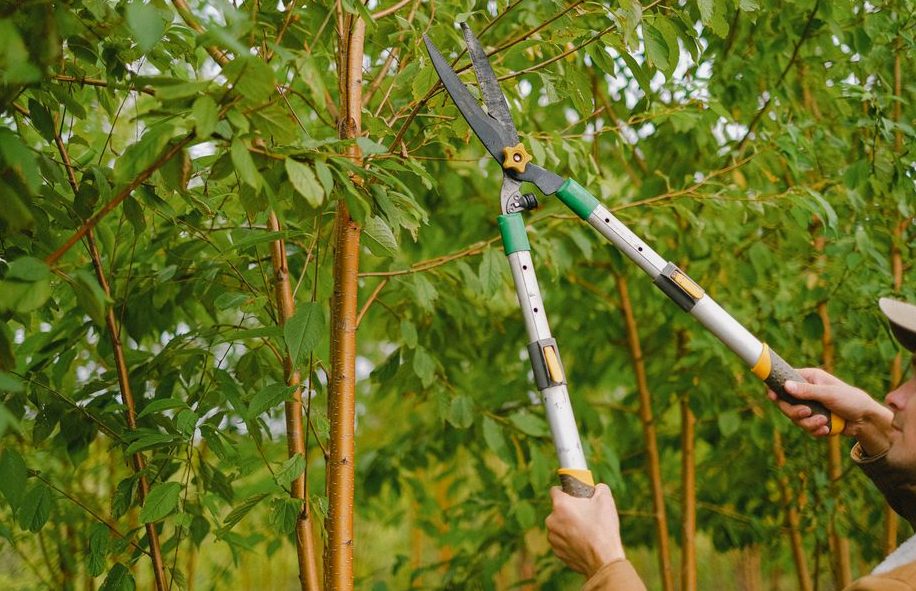
On any branch over 1 inch, we make a precut first, then the final cut. The precut keeps the bark from tearing down the trunk as the weight comes off. One cut at the attachment point is not the whole procedure on a larger branch.
The final cut sits just outside the branch collar, the slightly swollen ring where the branch meets the trunk or parent limb. Cutting flush to the trunk may look cleaner, but the collar is where the cut belongs. If a contractor says only "we'll tidy it up," ask where the finished cut will sit and how the bark will be protected. We can answer both before the saw starts.
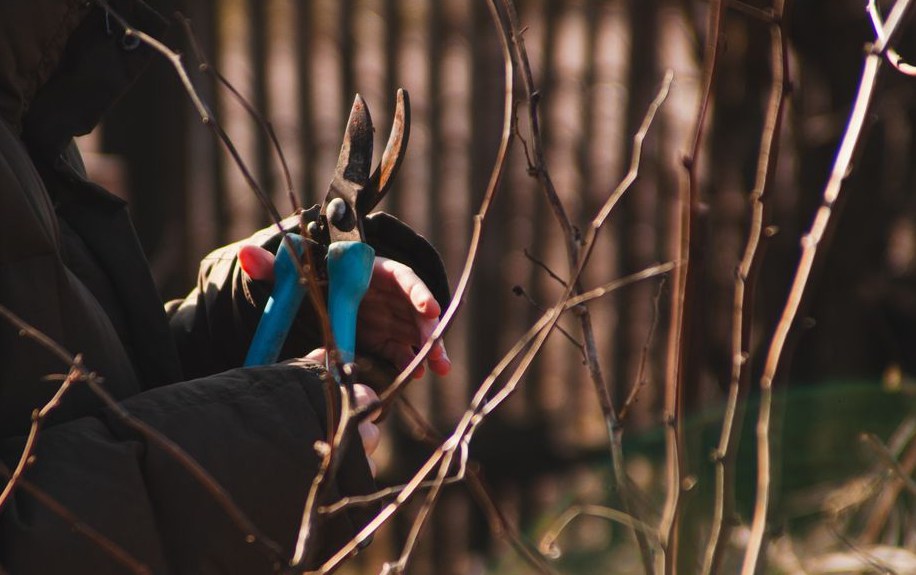
Limbs that can't be dropped get lowered
Some limbs can't safely be dropped or controlled by hand. For those we run a separate lowering rope, and we never attach it to the same crotch as the climbing line. The lowering line and the climber's line each get their own attachment.
We decide this limb by limb. Two branches on the same tree can come down in completely different ways, and a small trim can still involve a limb that needs rope. Our climbing kit includes a work-positioning lanyard along with climbing spurs and gaffs. The question to ask any tree worker is simple: once that branch is cut, what controls it on the way down?
What a quote should spell out
A useful quote names the branches. It says which ones get the precut, where the final cuts land, which limbs go down on a rope, and whether hauling the debris is included. Two quotes that both read "tree trimming" can't be compared. Two quotes that list the actual work can.
When we walk the yard with you, expect us to tie each line of the quote to a branch you pointed at.
Wet weather and development projects
Hanford gets about 11 inches of rain a year, mostly in the rainy season, with January the wettest month at roughly 2.2 inches and August nearly dry. Street flooding is the city's main flood problem, so after a storm we look for standing water and drainage problems before we stage equipment or haul debris out.
If the pruning is part of a development project, tell us up front. Hanford's current adopted codes are the 2025 editions of California's building and related state codes, and we'll check the city's current requirements against the cutting scope before work begins.
See the Work
A visual look at what the service involves.

How It Works
-
Tell Us What You Need
Tell us what you need done and when, you'll get a straight answer, not a sales pitch.
-
We Walk the Job
We come out, look at the space, and confirm exactly what the job involves.
-
Know the Price First
You get the scope and the price in writing before any work starts. No surprises.
-
The Job, Done Right
We do the job right the first time, clean up after ourselves, and stand behind the work.
Depending on what we find, that can mean:
- For chipper operation, keep guards in place, never reach into operating equipment, and use lockout when servicing or clearing a jam.
- Wear task-appropriate protective equipment, including head, eye, hand, and foot protection; use chainsaw chaps and hearing protection for chainsaw work.
What It Typically Costs
Ranges to budget around - every situation is priced on its own specifics.
$200–$2000
$75–$1500
Our Service Area
We work across Hanford, CA. Call (559) 794-9788 to confirm coverage for your address.