Signs you have a buried root crown problem
Look at where the trunk meets the ground. A healthy tree flares outward at the base. If yours goes straight into the soil like a fence post, scrape back a little mulch and check whether the flare is hiding underneath. Slow decline over several seasons is the other signal: small, sparse or off-color leaves even when you're watering, or dieback that starts in the lower canopy and works upward. A soft spot when you press the bark at the base, or mushrooms growing at the soil line, means decay is already established. A tree planted too deep will eventually show all of this. In Hanford's semiarid climate, a stressed tree shows it fastest in the dry months.
What is actually happening at the root crown
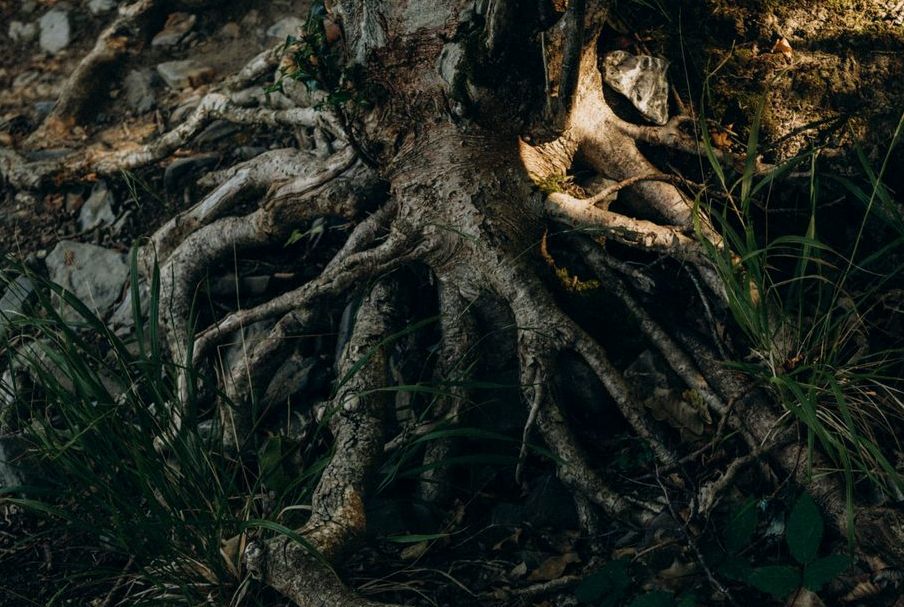
The flare is where the structural roots start, and that tissue is built to live in open air. Bury it and two things go wrong. Soil and mulch against the trunk keep the bark damp, and bark that stays damp rots. Roots that hit buried trunk tissue also tend to wrap around it instead of spreading out, and as they thicken they squeeze the vascular tissue and never anchor the tree properly. A tree can compensate for years. By the time the canopy thins, the damage at the base is usually well along, which is why we'd rather see a tree early.
How we check the tree before we dig
Before any digging, we decide whether the tree can take the work. We examine it for how well it can withstand the forces involved, including the forces of rigging and lowering cut sections if we need to take weight off. If rot or a lean means the tree could shift once we open up the base, we say so, and we talk about whether excavation makes sense or whether removal is the safer call. We also decide whether rigging is needed at all, and whether the crew can use it safely given the tree's condition and the space around it.
The excavation process and what we use
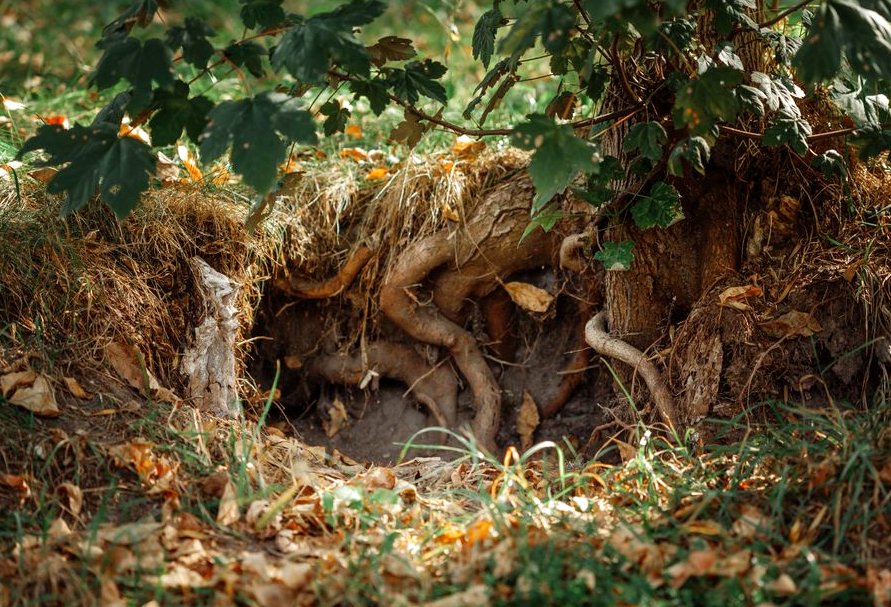
We work by hand around the trunk, taking soil away in layers so we don't wound the flare or the outer bark. As the roots come into view we check for girdling roots and cut the ones that are choking the trunk. A work-positioning lanyard keeps us steady at awkward angles around the base, and rigging rope handles any piece we have to support or lower along the way. Any wounded bark gets cleaned up. The soil is then graded away from the trunk so water doesn't pool against it, and we don't re-mulch right up to the tree. Leave a bare ring at the base and keep mulch back from the bark.
What affects the cost
Three things move the price: the size of the tree, how deep the crown is buried, and how much root work turns up once we're in the ground. A bigger trunk means more soil to move and more care. A tree with girdling roots wrapped well around the trunk takes more time to cut and redirect cleanly. A tree hemmed in by a fence or patio means more hand work. We quote after seeing the tree in person, because nobody can price a root crown job without knowing what's under the soil.
After the work and what to watch for
Hanford gets about 11 inches of rain a year, mostly in the cool, moist winter. January is the wettest month and August is close to zero. A tree that has just had its root crown opened up is under stress, so if the work lands in the dry season, plan on watering it through the summer. Over the following months, look for better leaf quality and new growth coming from the canopy. If the tree keeps declining, or the exposed tissue looks like it's drying out instead of callusing over, call us and we'll come back and look.
How It Works
-
Tell Us What You Need
Tell us what you need done and when, you'll get a straight answer, not a sales pitch.
-
We Walk the Job
We come out, look at the space, and confirm exactly what the job involves.
-
Know the Price First
You get the scope and the price in writing before any work starts. No surprises.
-
The Job, Done Right
We do the job right the first time, clean up after ourselves, and stand behind the work.
Some of what that looks like in the field:
- Expose the upper root system or highest main lateral roots at the soil surface.
- Keep the root-collar bark intact and avoid construction machinery that could wound the roots or collar.
Our Service Area
We work across Hanford, CA. Call (559) 794-9788 to confirm coverage for your address.