What brings most people to call us
The calls usually start one of two ways. You noticed something yourself: dead branches high in the crown, leaves dropping early, fungal growth on the bark or at the base, a lean that wasn't there last year, or bark that's peeling or cracking. Or we spotted something while doing other work on your property and told you about it. Small things add up. A sparse canopy one season and a sparser one the next. A branch that died back last summer and never pushed new growth this spring. July highs here average close to 98°F, so some leaf scorch and early drop is heat. Part of our job is telling heat stress apart from a tree that's actually declining.
What we check, from the roots up
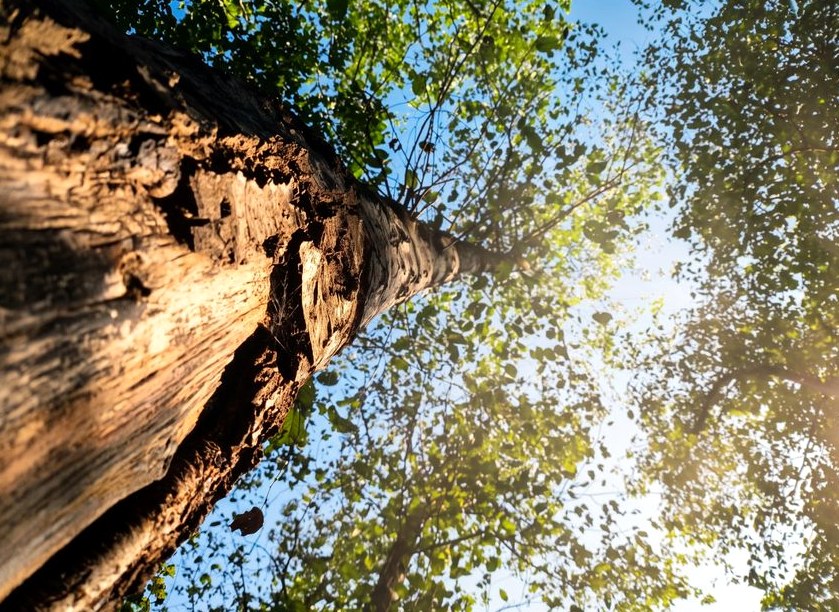
We start at the ground, because a lot of what shows in the canopy begins in the roots. Street flooding is Hanford's main flood problem, and roots that sit in saturated soil for days can rot, with the damage showing up in the crown months later. So we look at the root flare for fungal growth and soft spots, and at drainage around the tree. Then we work up the trunk, checking for cavities, soft or hollow-sounding wood, loose bark, and how any cracks are progressing. We finish in the scaffold branches, the main limbs, looking for dead wood, weak attachments and rubbing. The aim is to separate sound wood from dead or decaying wood, because that tells you what the tree can actually carry.
Why a quick look isn't enough
A ten-minute drive-by doesn't cut it. We walk all the way around the tree, because a defect on the far side is easy to miss from the street. Where bark looks questionable, we get hands on it and see what's underneath: green and living, or brown and dead. Not every concern needs more than that. Some trees need monitoring, and we'll say so rather than recommend work the tree doesn't need.
What drives the cost
Tree size comes first. A large mature tree takes longer to inspect thoroughly than a young shade tree, and there's more structure to get through. Access matters too. A tree behind a fence, crowded by landscaping, or in a yard that's soft or holding water after rain takes more time to work around. The number of trees counts as well, since several on one lot is a longer visit. If the inspection turns up treatment or follow-up work, that gets its own estimate. You'll know what each part costs before you decide anything.
What happens after the inspection
Most inspections end with a plain recommendation. Sometimes it's treatment: pruning out dead weight, or support such as cabling for a weak fork. Sometimes it's monitoring, with a return visit in six months to recheck one specific area. And if the damage is severe, we'll tell you the tree is a risk and removal is the right call. If removal is the answer, the job is done with chainsaw and hand saw. We agree on a visual or audible signal between the crew overhead and the crew on the ground before any rigging starts, mark the drop zone with cones, and keep everyone on the ground out of it. After a storm we also check for standing water and drainage problems before staging equipment or hauling debris. If the tree sits in a development project, check the city's current requirements as well, since Hanford has adopted the 2025 editions of California's building and related codes.
From First Call to Finished Job
-
Tell Us What You Need
Tell us what you need done and when, you'll get a straight answer, not a sales pitch.
-
We Walk the Job
We come out, look at the space, and confirm exactly what the job involves.
-
Know the Price First
You get the scope and the price in writing before any work starts. No surprises.
-
The Job, Done Right
We do the job right the first time, clean up after ourselves, and stand behind the work.
Depending on what we find, that can mean:
- Use binoculars to view the upper canopy, a mallet to sound the trunk, or a probe to check cavity depth when indicated.
- Collect leaf, bark, soil, insect, or affected-tissue samples for further analysis when a visual inspection cannot establish the cause.
Typical Hanford Pricing
$350–$550
$100–$250
Our Service Area
We work across Hanford, CA. Call (559) 794-9788 to confirm coverage for your address.